
Paddy Upton
One of the more surprising lessons I’ve learned in high-performance environments is that the quality of a message has far less influence than most leaders assume. We often prepare what we want to say, shape it carefully, and feel ready to deliver it. But the real determinant of whether that message lands has far more to do with the environment we’re speaking into than the content itself.
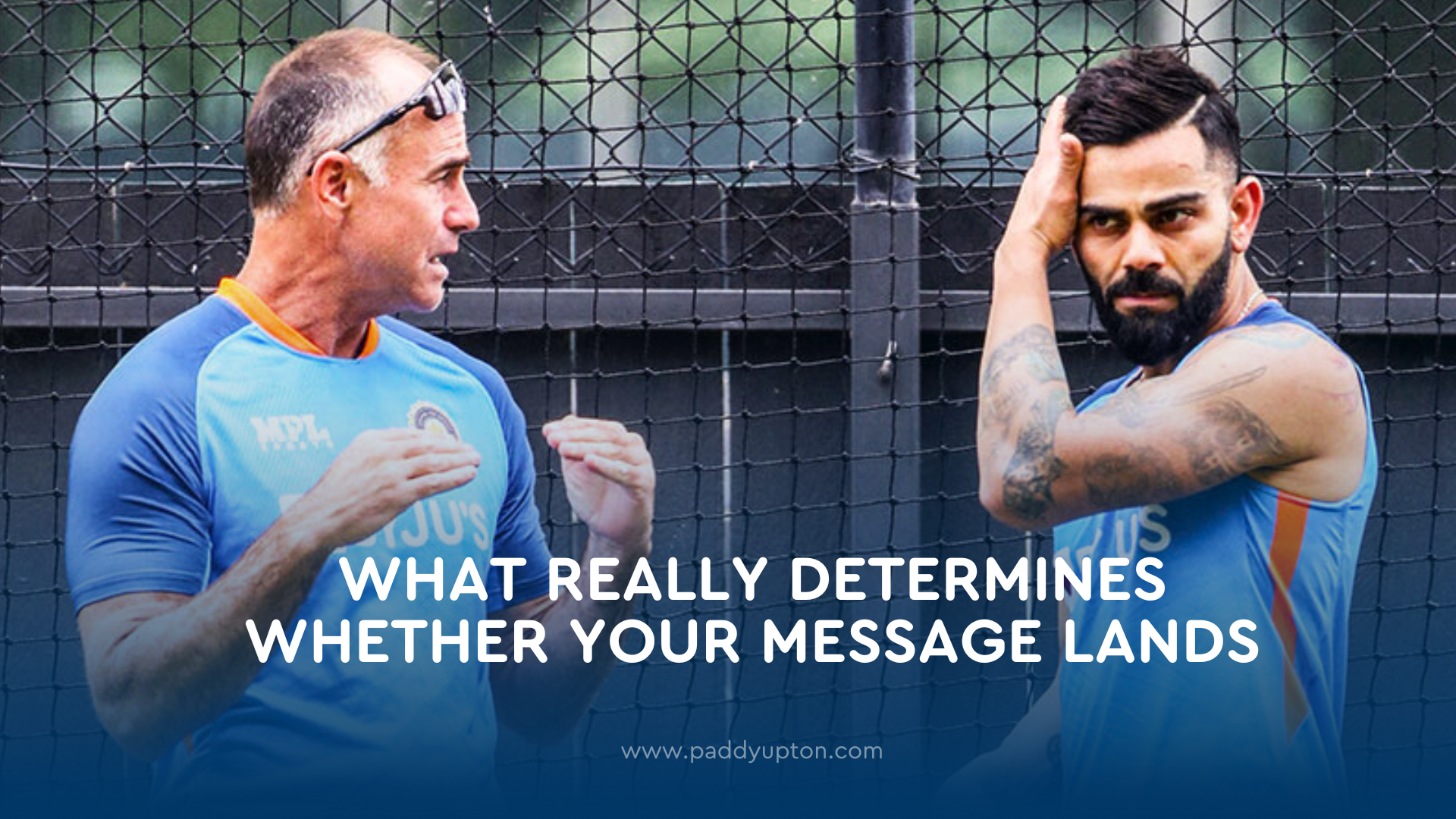
Working with players like Virat Kohli made this clear in a different way. Kohli’s gift isn’t only his talent; it’s the way he treats preparation. His commitment to simple, repeatable basics is as good as anything I’ve seen in sport. He prepares excellently, not occasionally, but as a way of being. That level of consistency sets a foundation for world-class performance over sustained periods.
But preparation alone doesn’t explain everything. A deeper leadership lesson came from MS Dhoni, and it arrived quietly.
We were a few weeks into an IPL season. I was contributing regularly in team meetings, offering ideas and insights wherever I thought they might help. After one of those meetings, Dhoni walked over, put an arm around me, and said gently, “Paddy, you don’t have to talk every time.”
He wasn’t being harsh. In fact, his tone made it harder to ignore. What he was really pointing to was that I was focused on the message I wanted to land, rather than sensing whether the room had the runway for it. I was thinking about the airplane — the content — when the real work was in paying attention to the runway — the players, their energy, the timing, and whether anything I said would actually have traction.
That image has stayed with me. In aviation terms, even the most sophisticated aircraft depends on the state of the runway. A long runway gives you time to land gently. A short runway asks for brevity. Wind, weather, visibility — they all influence when and how you approach. And sometimes the best option is to circle in a holding pattern and wait for conditions to change.
Leadership is remarkably similar. There are moments when people have the capacity to receive a longer, more layered message. At other times, attention is short, emotions are high, or the environment is unsettled. Forcing the landing in those moments often creates more resistance than clarity.
Dhoni’s feedback shifted my orientation. Instead of beginning with what I wanted to say, I started by sensing the room. Were people available? Was this the right moment? If so, how much runway was there? How gently or firmly should the message be brought in? And if the conditions weren’t right, was it wiser to wait?
This wasn’t about withholding insight. It was about improving its chances of being heard.
Most leaders prepare the airplane. Fewer pay attention to the runway. And in my experience, that’s often where the real craft of leadership lives — in the ability to sense, to time, and to choose an approach that matches the human landscape in front of you.
The message matters. But the moment determines whether it lands.

Paddy Upton is a renowned mental coach, leadership consultant, and former high-performance coach to elite international athletes. With a background in sport psychology and years of experience working with top cricket teams, he now helps individuals and organisations unlock their full potential through talks, workshops, and his unique A-Game methodology.

