
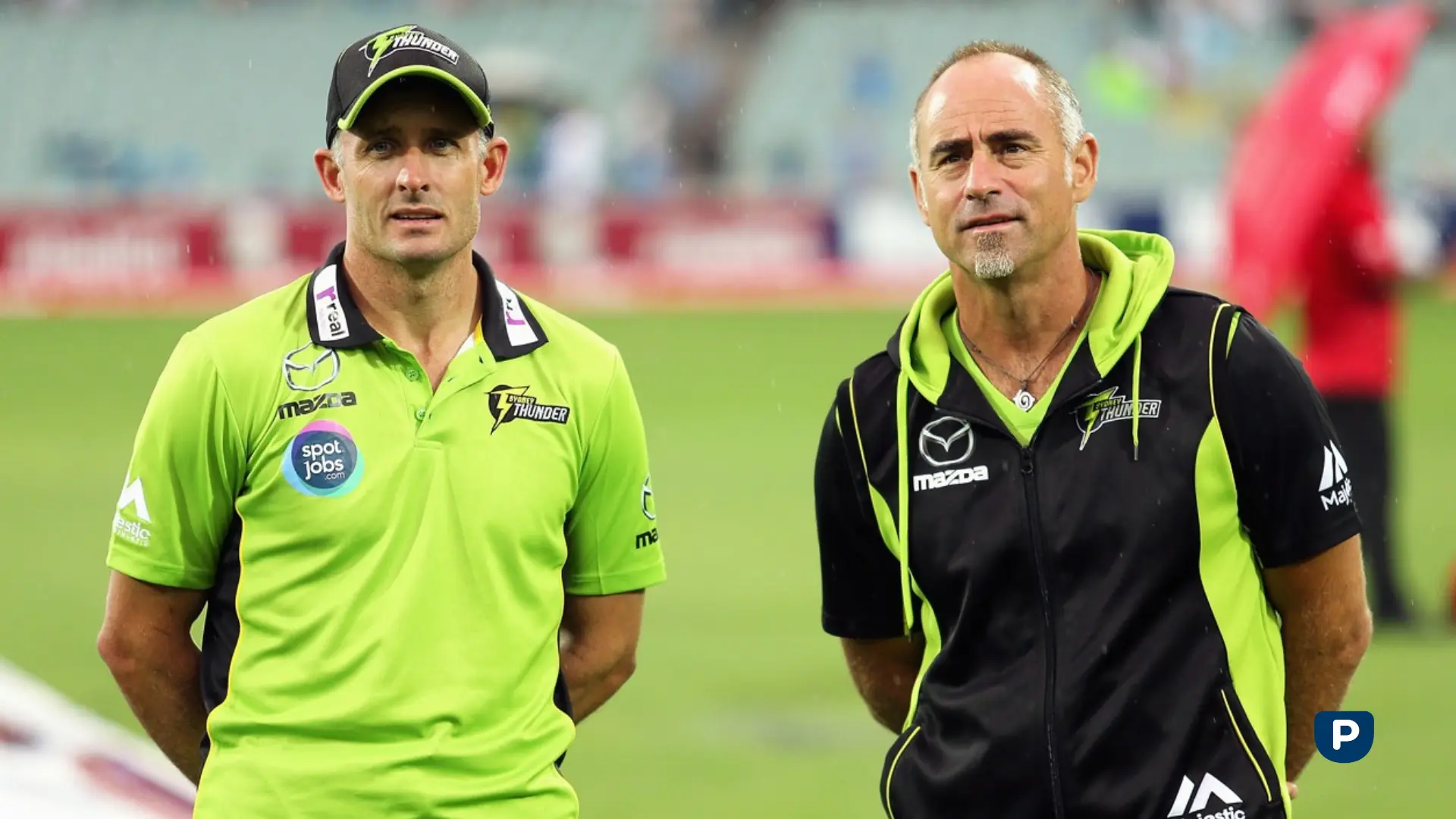
Mike Hussey told me about the day of his Test debut, 10 years after he’d started chasing it.
He was, in his own words, the smallest, skinniest kid at his school, one who couldn’t even hit a ball off the square. Somewhere in there, a sense of not being good enough took root, and it never fully left him.
It’s part of what made him such an intense competitor. It’s also, by his own account, what made him so hard on himself. Teammates would tell him to relax, to enjoy it more. He wanted it too badly to hear that properly.
He scored more than 15,000 runs for Western Australia over 10 years and still wasn’t picked for his country. At one point, convinced the selectors wanted more aggressive batters, he tried to become one, changing the patient, watchful game that had actually got him noticed in the first place. It backfired. He got dropped.
He had to find his way back to the player he actually was before he got another chance.
So when his Test debut finally arrived, it came loaded with everything those years had built. Cameras at the airport. People treating him, in his own words, like a rock star. His baggy green cap presented to him by the oldest living Australian Test player.
Then he walked out to bat.
As the bowler ran in, his mind went somewhere else entirely. Backyard cricket with his brother. Getting dropped. Working his way back. His last thought, he told me, was that he could not be seen crying before his first ball in Test cricket.
It was a bouncer. It whistled past his eyebrows. If it was on the stumps, he would likely have missed it and been dismissed first ball.
He didn’t survive much longer though – getting out for one run, with the emotion and mental distractions getting the better of him. His mind drifted away from the focus that was required, driven by the emotions that overwhelmed him.
The team won that Test. During the post-match celebration, he desperately wanted another chance, and to do things differently next time – to prove to himself, and to everyone else, that he had what it took.
His next Test was in Hobart. No airport crowd. No ceremony. He described it as a relaxed, chilled-out place, with none of the extra attention a debut carries. His plan was simple: prepare well. Focus on the process of preparation, and on doing his job, one ball at a time. Without the influence of the distractions that had undermined him last time.
He went on to score 137 in that innings and was awarded Player of the Match.
10 years of waiting hadn’t disappeared between the two Tests. Neither had the intensity that had driven him there. What had changed was how he managed the mental and emotional distractions, the noise outside of him that pulled his attention off that which was important.
Too often, when an individual or team arrive at one of the biggest moments of their life, they think they need to deliver one of the biggest performances of their life. This is possibly the most common mistake that people make when arriving at that new level, at their debut, their first final, or biggest presentation. You don’t need to deliver a special performance just because it’s a special moment. Deliver at your regular best level, which is very often dictated by your quality of preparation.

Paddy Upton is a renowned mental coach, leadership consultant, and former high-performance coach to elite international athletes. With a background in sport psychology and years of experience working with top cricket teams, he now helps individuals and organisations unlock their full potential through talks, workshops, and his unique A-Game methodology.

